
Programme
Speaker
Group A
Is your research systems infrastructure fit for purpose?
Guidance for the 2029 REF will be formally finalised in 2026. A final version The UKRI research data policy is expected in 2026. These policies, related technology issues including AI, funding concerns and the wider digital transformation agenda impact a university’s research system infrastructure.
Librarians have taken a significant role especially in terms systems to manage open science policies and open access. But this is just part of the picture. Other university departments manage and support a variety of major solutions. Furthermore the research systems infrastructure must interoperate with a range of university admin solutions as well as external systems. Based on his work with universities and vendors, Ken will outline the challenges and opportunities and analyse market trends for solutions particularly as providers try to develop a more integrated and interoperable research system environment
Ken Chad
Ken Chad Consulting
Biography
Ken works with universities, libraries, archives, local and central government, the NHS, sector bodies and businesses to help with strategy, understanding needs, business models, value propositions, user experience and innovation. He also reviews services and helps evaluate and procure new technology solutions. In 2025, in partnership with Helen Anderson Consulting, he set up a new AI initiative – ‘AkroNova’ – to provide effective user insights quickly and economically. Ken has published widely including a number of free, open access library technology ‘Briefing Papers’. He also manages Higher Education Library Technology a free, open community, open data resource.
Han Solo needs a hug: What fandom communities can teach scholarly publishing
Scholarly publishing is broken. Despite decades of critique and the promise of Open Access, we still have a system characterised by gatekeeping, inequity, and rigid formats that exclude innovation and marginalised voices. What if the solution doesn’t lie in tweaking existing models, but in learning from an entirely different community that has already solved many of these problems – and just happens to involve a lot of people writing stories about Yoda, James T. Kirk and Buffy the Vampire Slayer?
Archive of Our Own (AO3) is a community-run digital repository hosting over 15 million works of fanfiction. Entirely open access, powered by volunteers, run on donations, and built on open-source principles, it demonstrates what’s possible when platforms are designed by and for their communities rather than for commercial profit.
This session will introduce AO3 and some of its innovative features: from its flexible ‘folksonomy’ tagging system that lets users create wonderfully descriptive and specific tags like “Han Solo Needs a Hug” while maintaining discoverability through smart metadata mapping, to its multiple peer review models, support for diverse content formats, and non-hierarchical recognition systems.
You don’t need to know anything about fanfiction to engage with this session. What you do need is curiosity and a willingness to consider what internet fandom can teach us: how to transform scholarly communication from a gatekept, hierarchical system into a collaborative, community-led ecosystem that actually serves scholars, libraries, and the public, rather than corporate shareholders.
Help us, fandom, you’re our only hope.

Caroline Ball
Open Book Collective
Biography
Caroline Ball is the Community Engagement Lead for the Open Book Collective, and has previously worked as an academic librarian, copyright and licensing advisor, and lecturer in publishing. Her research interests centre on knowledge equity, information ethics, and democratisation of access to information and learning opportunities, focusing particularly on systemic barriers and biases in dominant knowledge systems. She is also an active Wikipedian, was awarded the UK Wikimedian of the Year award in 2020 and currently serves on the Wikimedia UK board of trustees.
Looking back to look forward – what is the real-world impact of open access on our libraries?
Based on ongoing PhD research into the effects that the rapid shift to open access has had on libraries and services, this breakout will discuss some of the initial results gathered from 25 library research support teams in the UK. It will look at both the role of the university library in the growth of open access in the UK, and the impact of the REF open access policy on services and the way they run. This research into the shift to open in real terms seeks to demonstrate what we can learn from looking to the past to influence our future

Kirsty Wallis
University College London
Biography
Kirsty is currently Head of Research Liaison in UCL Library services where she leads the day-to-day running of the Office for Open Science and Scholarship, coordinating activity and advocacy across all aspects of open science. Kirsty is also a part-time PhD student in UCL’s Department of Information Studies, where she is researching the evolution of research support services in Libraries and the effect the shifting policy landscape around Open Access has had over time.
Community-built trust in turbulent times: How ORCID, Jisc & UK institutions support research integrity and collaboration
Given the rapid changes and multiple pressures on academic research; the need to embrace community-supported solutions that foster research integrity, credit institutions and researchers with their contributions, and facilitate global collaboration, is stronger than ever.
Presented by ORCID & Jisc, with further insights from an information professional at the University of Glasgow, we will explore:
– How the UK ORCID Consortium (led by Jisc) has scaled institutional adoption and best practices for use of ORCID
– Why institutional adoption of ORCID is critical to research integrity, scholarly communications, and global collaboration
– What are some of the insights and lessons learned from the library team at a leading UK research institution when implementing ORCID in systems & workflows
.
Shivendra Naidoo
ORCID
Biography
With over a decade of experience working in the Academic Publishing and Educational Technology industries, Shivendra is passionate about supporting Research and Scholarly Communications. He holds a BSc in Physics with Astrophysics, and postgraduate qualifications in Business, and Accounting & Finance. As an Engagement Manager at ORCID in the Global Direct Members team, Shivendra focuses on growing member & integration adoption; as well as collaborations with Vendors, Service Providers and Publishers who serve the wider research community.
Liz Bal
Jisc
Biography
Liz leads Jisc’s research management product strategy, with a focus on building open and interoperable datasets and services that enable better outcomes for research – driving efficiency, transparency, and collaboration across the sector.
With a background in biology, Liz began her career in academic publishing, gaining expertise in open access and open research practices. This experience sparked her interest in improving the way information flows across the research ecosystem. At Jisc, she brings this perspective to developing data and infrastructure that support the research sector in navigating an evolving policy, funding, and digital landscape
Alastair Arthur
University of Glasgow
Biography
Alastair is a Research Information Administrator in the Research Information Management Team within Information Services at the University of Glasgow. His work with researchers across the University involves facilitating open research, encouraging the adoption of good research practice (such as using persistent identifiers like ORCID), supporting compliance with research funder open access and data sharing requirements. He is also responsible for the administration of research outcomes reporting to funders to demonstrate compliance with these requirements. Alastair has a MA in Politics and Economics from the University of Glasgow and a MSc in Information and Library Studies from Robert Gordon University
Beyond borders: education equity through open education resources (OER)
This paper will examine the potential of Open Educational Resources (OER) for the promotion of educational social justice, with a particular focus on higher education. The paper will also explore how open knowledge can serve as a catalyst for global equity, collaboration, and innovation in education. It will examine how OER transcends traditional barriers such as geographic, linguistic, economic, and institutional barriers, to create a more just and inclusive learning landscape. It will focus on the evolving role of academic libraries as enablers of equitable access to knowledge and lifelong learning. Framed within the principles of inclusivity and openness. The discussion will situate OER within the broader global movement for educational equity as advanced by the International Federation of Library Associations and Institutions (IFLA) and aligned with the United Nations Sustainable Development Goal 4 (Quality Education).
Drawing on case studies, from a Ghanaian and UK universities. The paper will examine how educators, researchers, students and institutions across diverse regions are leveraging OER to co-create content, decentralise knowledge authority and amplify underrepresented perspectives. It will also explore how OER supports decolonising curricula, expand lifelong learning opportunities and foster sustainable knowledge ecosystems that are adaptable across borders and disciplines.
The paper will further explore how academic libraries are responding to systemic challenges such as resource limitations, textbook scarcity and digital inequities to highlight initiatives through which libraries will localise open content, support faculty in OER adoption, and influence institutional and national policies to democratise education.
The paper will also reflect on the anticipated impact of regional collaborators, particularly with the African Library and Information Associations and Institution (AfLIA) and UNESCO–led OER frameworks. Based on the outcomes of this research, the paper will call for a renewed commitment from the global library community to scale up OER advocacy, invest in capacity development and strengthen cross-border partnerships. It will argue that such effects will be critical for building inclusive and sustainable knowledge societies where learning truly knows no.
Mac-Anthony Cobblah
University of Cape Coast
Biography
Dr. Mac-Anthony Cobblah has a PhD in Information Science and a regular speaker at the UKSG
Conference. He has a strong background in Open Science and Digital Scholarship. He brings on
board perspectives and insights from African continent to UKSG Conferences. Dr. Cobblah is
currently the University Librarian of the University of Cape Coast, Ghana Vice President, Africa
Library Association and Institutions (AfLIA); Chair, Governing Council of the Consortium of
Academic and Research Libraries in Ghana (CARLIGH)
He is also a member of the Advisory Board, DOAJ and the Licensing Coordinator of EIFL for

Gloria Tachie-Donkor
University of Cape Coast
Biography
| Dr. Gloria Tachie-Donkor holds a PhD in Information Science from the University of South Africa. Presently, she serves as a Senior Assistant Librarian and Head of Client Services Department at the University of Cape Coast. She is also a Research Fellow at the Department of Information Science, University of South Africa. Dr Gloria Tachie-Donkor contributes to cutting-edge research in her field, enriching the scholarly community with her insights and findings. Beyond her administrative and research roles, Dr. Tachie-Donkor is a dedicated educator, shaping the next generation of information professionals as a lecturer at the Information Literacy Skills Unit of UCC. |
Josh Sendall
University of Leeds
Biography
Josh leads the delivery of Knowledge for All: Libraries’ Vision for 2030, advancing the University’s commitment to Universal Values, Global Change. He positions libraries as dynamic socio‑technical hubs that empower communities, drive inclusion, and accelerate the academic mission. An active voice in global scholarly communications, he is a UKSG Trustee and Conference Planning Chair, a Board‑elect member of RLUK, and serves on the Clarivate Academia AI Advisory Council. Josh is also a Visiting International Fellow at the Kula Academy, University of Victoria. Passionate about open knowledge, he champions equitable access and libraries as essential infrastructure for thriving, connected communities.
Panels with purpose: the art of graphic storytelling in library engagement
Faculty Librarians Gem Sosnowsky and Ciara Murray explore graphic storytelling as a tool for engagement and collaboration, based on their experience of developing new collections and communities. They encourage participants to consider how this might be applied in their own contexts – for example, in explaining some of the issues libraries are currently grappling with, or to showcase resources and services.
Attendees will also be invited to create their own one-page comic. How will you use the medium to communicate in a compelling and comprehensible way to colleagues, library users, and the wider world? Materials will be provided – please note: being able to draw is NOT a requirement!
Ciara Murray
Lancaster University
Biography
Ciara is Faculty Librarian for Humanities, Arts and Social Sciences at Lancaster University, working in the teaching and engagement team to promote library content; she also teaches library research skills for the Law School. Previously she was Librarian at Queen Elizabeth’s School in Barnet, where she set up a library from scratch and witnessed first-hand the pulling power of graphic novels. Professional interests are information literacy, engagement, and student experience. She is also a keen gardener, folk musician, lifelong reader, and firm believer that access to libraries – and librarians – improves lives.
Gem Sosnowsky
Lancaster University
Biography
After many years as a School Librarian and Board member at The Lakes International Comic Art Festival (LICAF), Gemma is bringing her experience of using comics in the classroom to her role as Faculty Librarian.
Library-led hosting and publishing: How it started and how it’s going
As diamond OA continues to develop – in funding mandates, institutional policies and publishing – so too does library involvement. Libraries are ideally positioned to support academics and researchers by facilitating diamond OA hosting and publishing, but how does this look in practice and how can we ensure lasting sustainability?
Join us to find out how four UK libraries are doing just that. We’ll discuss: setup and continuity; growth; non-traditional outputs; challenges; ‘the prestige problem’, and more. Come and learn about the variety of scope for library open hosting and publishing, and how libraries can work together to support diamond OA
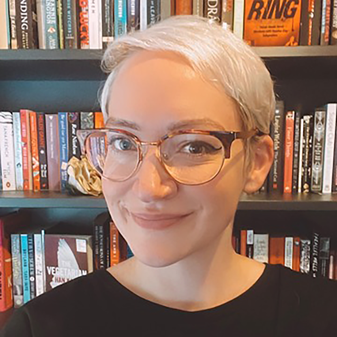
Rebecca Wojturska
University of Edinburgh
Biography
Rebecca Wojturska (she/her) is the Open Access Publishing Officer at the University of Edinburgh, responsible for managing Edinburgh Diamond: the Library Publishing Partner for Diamond Open Access books and journals created by UoE academics, professional staff and students. Rebecca is also the co-lead of ALPSP Library Publishing SIG and a board member of: JEAHIL; Journal of Information Literacy; the Library Publishing Curriculum, the Open Institutional Publishing Association; the Open Journals Collective; and the PKP Members Committee. In her spare time she loves reading Gothic literature, watching horror films, playing D&D, and crushing her enemies at board games.
Sarah Humphreys
Bodleian Libraries
Biography
An avid hiker and reader Sarah is a relative newcomer to open. She has been working in the field since 2018 and became Open Scholarship Librarian in 2021. Working with a team of experts on all things open at Oxford University and facing the challenges and opportunities that such a research intensive institution can offer.
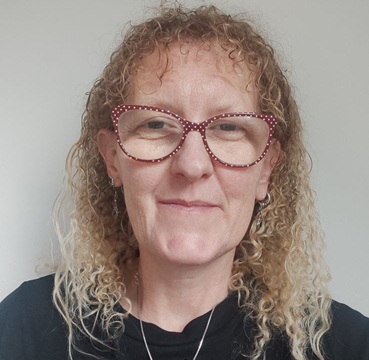
Cath Dishman
Liverpool John Moores University
Biography
Cath is the Open Research Librarian (Scholarly Communications) at Liverpool John Moores University. She takes the lead for open access advocacy at LJMU and manages the institutional repository and open journals service. Cath has over 25 years’ experience in libraries in a range of roles from academic services, customer services, user support and most recently research support. Cath is also the Chair of CILIP’s Library and Information Research Group (LIRG) and Co-Chair of the ALPSP Library Publishing Special Interest Group
Tom Morley
Lancaster University
Biography
Tom is currently undertaking a secondment as the Research Culture and Open Monographs Lead at Lancaster University Library. Within this role he leads and coordinates programmes of activity to develop an Open Research Culture as well as exploring options to facilitate open monograph publishing. In his substantive post he works across the areas of Open Access, Research Intelligence and Research Data Management to coordinate and deliver a range of projects, services and initiatives as an Open Research Officer. Tom is also co-editor of the UKSG e-News,