
7 March 2025
Jane Daniels, Cataloguing Ethics Steering Committee – UK Representative.
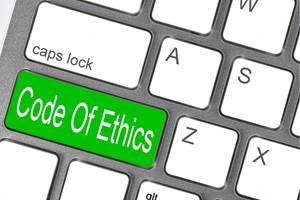
As I sat through the presentations last December at the UKSG Forum – Our Profession in 2030: publishing, sharing and curating content now and in the future I wondered if the people attending the forum – librarians, publishers, system, content and record vendors – appreciated how the quality of search, discovery and access (and the concomitant generation of sales) is ultimately dependent on the metadata; and also upon the people who create, disseminate, enrich and preserve it.
The work of cataloguers and metadata managers, and the choices that they make in deciding what to put into a record, and where those records go, matters. These decisions dictate whether resources will be found and accessed, a priority for publishers and libraries alike.
So, for instance, if we look at publishers’ efforts to assist libraries in their DEI and decolonisation work – by commissioning new authors from diverse backgrounds or consulting their back catalogues for forgotten voices – so much depends on the work of the cataloguer in describing and classifying the works so that they can be found and accessed.
Decisions about who creates the metadata; consideration of the resources at their disposal; and an acknowledgement of the cul-de-sacs created by the lack of any general agreement to share records across the metadata ecosystem, can negatively impact on profits and, more importantly, (at least for librarians) attempts to rebalance societal narratives.
It is this latter point that cataloguers pay particular attention to as, like the rest of the information profession, they are bound by the ethical codes produced by professional organisations like CILIP. This means that their decision-making is to some extent values-based.
But cataloguers must also take account of rapid technological change – the tools of the trade; ever-evolving international cataloguing guidance and metadata standards; and the pressing need to advocate for the resources to reskill to meet the demand of existing roles and those that are emerging – think repositories work, collections exposure via Wikipedia and Wikimedia using Wikidata.
Enter the Cataloguing Code of Ethics 2021.
The Code, grounded in critical theory (question and participate!), decolonisation and DEI, took shape over 3 years and was an open, inclusive, international community initiative led by the Cataloguing Ethics Steering Committee.
The objective? To codify the special ethical responsibilities that cataloguers and metadata managers have; and to create a short, standards-neutral, practical document, written in plain English which can be used by anyone creating, sharing, enriching or preserving metadata – in the GLAM sectors; for publishers; or for other commercial partners.
The Code consists of 10 high level statements – statements of positive intent – each dealing with an aspect of cataloguing and metadata work.
The statements can be used to review metadata workflows, policies and practice; and to advocate for the value of any aspect of metadata work. And they are a jumping off point for discussions and decisions on ethical dilemmas. Discussions that might ripple across a department; the wider organisation; audiences and user groups; contracted service providers; or standards organisations.
Even if you don’t catalogue, you should read the Code because the statements will provide insight into the work required to produce metadata that is fit for purpose and ethically sound. And if you have outsourced your metadata supply the Code can still help you look at commercial relationships and consider whether these agreements actually give you a return on investment as well as aligning with your organisations’ remit.
Let’s consider Ethical statement no.1. We catalogue … with the end-user in mind to facilitate access and promote discovery.
This is the raison d’etre of cataloguing and it also makes excellent business sense. But do you know who your users or customers are? How do you measure their customer satisfaction/search, discovery and access experiences? What is your return on investment in systems, content and third-party services like metadata supply?
Metadata should allow people to find what they want, when they need it; and to be able to distinguish if the formats that the information is available in are suitable for them; or can be used on the technology that they have access to. Does the metadata that you create or import facilitate these functions?
Moving on to Ethical statement no. 7. We collaborate widely to support the creation, distribution, maintenance, and enrichment of metadata in various environments and jurisdictions
Please take a look at the diagram (slide 3) that I included in my UKSG presentation in December for a graphical illustration of the many different spheres of opportunity, and the challenges, that exist in the current metadata ecosystem.
For publishers I recommend catching up with the BIC metadata initiatives, which commenced in 2019 as did the libraries Jisc Plan M initiative.
Both of these projects aim to maximise the tremendous opportunities that exist to remodel the metadata ecosystem e.g. reviewing the current anachronistic restrictive metadata licensing to create greater business efficiency and to bring metadata production into line with the drive for OPEN metadata incorporating FAIR and CARE principles.
BIC and Jisc have already asked their members where the pressure points in current metadata workflows exist. But follow on questions could be who can you work with to review and resolve these – locally, regionally, nationally and internationally? In other words, what can we do better, together? E.g. not explicitly mentioned in the Code, but something that should be of concern to us all, what are the environmental impacts of maintaining multiple versions of records for resources in various proprietary data silos?
Finally Ethical statement no. 8. We insist on diversity, equity and inclusion in the workplace. We promote education, training, equitable pay, and a fair work environment for everyone who catalogues.
Like any other sector of the workforce cataloguers need the opportunity to learn the basics of their craft but also to continue to hone their skills via CPD activities as technology, standards and audiences evolve and change.
We also need to attract and retain people from diverse backgrounds who can apply their lived experience to the metadata ecosystem and play an active role in developing standards and vocabularies and extending audience engagement.
If you want an overview of what cataloguers and metadata managers do and why continued investment in posts and CPD are crucial I direct you to ALA Core competencies for cataloging and metadata professional librarians (Revised 2023)
Some appropriate questions to ask might also be what skills gaps do you, or your team members, have? What are your CPD needs? And which organisations can you partner with to plug gaps and develop, or share, staff expertise?
We have concentrated on 3 of the Ethical statements for this editorial but I hope that you will take the time to look at all ten.
Please do consider how you can use some, or all, of them to effect positive change – it’s good for society and good for business.
Additionally, do feel free to contact me if you would like an informal discussion about how you can use the Code in your organisation.