
The UKSG Online Conference will be a series of mini sessions scheduled over the week commencing 30th November. For more details see below.
When
Monday, November 30, 2026 – 14:00 GMT
to
Thursday, December 3, 2026 – 16:30 GMT
Where
Online
United Kingdom
About
Sponsors
Programme
Feedback
Registration
Contact
Share
About the Event
Registration
Register here for access to all the sessions.
Individual ticket – £50 + VAT (members)
Individual ticket – £60 + VAT (non-members)
One registration for one attendee to access all the sessions. Recording access included.
Watch party ticket – £100 + VAT (members)
Watch party ticket – £115 + VAT (non-members)
One registration for a group viewing. Multiple colleagues may watch together, but only one email address can be registered to access all the sessions. Access details and the event recording will be sent only to the registered email address. Recording access included.
Details of membership can be found at https://www.uksg.org/join
Summary
Trust is at the heart of scholarly communications, but in an era of AI, research integrity challenges, misinformation, and evolving research practices, how do we build and maintain it?
Join us for the UKSG Online Conference 2026, where librarians, publishers, researchers and solution providers will come together to explore one of the sector’s most important and timely topics. This year’s flexible online programme features 13 engaging sessions across four afternoons (UK GMT time), with presentations, panel discussions, and Q&As designed to fit around busy schedules while encouraging participation.
Attend the sessions that are most relevant to your interests, or join the full programme to explore the theme from multiple perspectives.
Each day we will explore a different perspective
- Monday – Research Integrity
- Tuesday – AI + Info Literacy, open access
- Wednesday – Trust in people and services, OERs
- Thursday – Scholarly Infrastructure and governance
Pre-event checks
To test your system ahead of time visit https://support.goto.com/webinar/system-check-attendee
Accessibility
At UKSG, we are committed to ensuring an exceptional experience for all our delegates. Our aim is to make presentations as accessible and inclusive as possible.
Here’s how we achieve that:
- Closed Captioning Options: Our GoToWebinar application allows you to toggle closed captioning on or off during live sessions. You can also customise the text size and colour to suit your preferences.
- Auto-Generated Transcripts: For each recorded session, we can provide auto-generated transcripts on request.
If you have particular accessibility requirements or questions about this event, we strongly encourage you to contact events@uksg.org as soon as possible.
Programme
- Monday 30 November
- Tuesday 1 December
- Wednesday 2 December
- Thursday 3 December
Time
Programme
Speakers
All times GMT
14:00 – 14:15
Opening of the Conference
Today’s theme: Research Integrity
Liam and Natalie will welcome delegates to this year’s new-format online conference before handing over to Katherine, representing Think. Check. Submit., who will open the day’s sessions with a reflection on how building trust in credible research and publications is linked to trust more generally.

Liam Bullingham
Overton
See Biography
Liam works in Engagement and Support at Overton. He has a background in university libraries, and has worked in five different UK institutions from Library Shelver to Assistant Director.
Within UKSG he has co-organised the November Conference, helps set strategy and governance, and regularly hosts sessions during the Annual Conference. From 2021-6 he co-organised the popular ‘Open Research Week’ annual event series with universities in Liverpool, Essex and Lancashire, is a former member of the LIS-Bibliometrics Committee, LIBER Educational Resources Working Group and was also on the Executive Committee of the British Conference of Undergraduate Research.

Natalie Climas
Cambridge University Press
See Biography
Natalie Climas is Head of UK Library Sales at Cambridge University Press, where she leads the UK library sales team and works closely with universities, libraries, and consortia across the UK. With nearly two decades of publishing experience, she has spent much of her career supporting academic institutions and navigating the evolving scholarly communications landscape, including the transition to open access. Natalie joined the UKSG Board as a Trustee in 2026 and is passionate about fostering collaboration between libraries, publishers, and the wider research community.

Katherine Stephan
Liverpool John Moores University/Think.Check.Submit.
See Biography
Katherine Stephan is the research engagement librarian at Liverpool John Moores University. She is responsible for organising library training related to research, outreach, engagement and publishing for all researchers at LJMU. She has a background in children’s librarianship and is a keen advocate of local libraries, open research and responsible research assessment. She is the librarian member of Think, Check, Submit (an initiative to help researchers identify trusted journals for their research); a member of the UKSG’s outreach and engagement committee; and a co-organiser of Open Research Week, a collaboration between LJMU, Edge Hill, Essex and Liverpool Universities.
14:15 – 15:00
Anatomy of a Paper Mill: A Collaborative Defense
Tiffany l. Leung
JMIR Publications
See Biography
15:00 – 15:45
Metrics for Trust: How Libraries, Institutions and Publishers Can Strengthen Research Integrity Together.
Adam Day
Clear Skies
See Biography
16:30 – 17:15
Citing Retracted Publications: What Do They Tell Us About Trust in Scholarly Communication?

Barbara S. Lancho Barrantes
University of Brighton
See Biography
Dr Barbara S. Lancho Barrantes is a Senior Lecturer in Data Science and Analytics at the University of Brighton, UK. A specialist in bibliometrics and scientometrics, she has nearly 20 years of experience in research evaluation and quantitative studies of science. Her work examines how research performance is measured across disciplines, institutions, and countries, with particular interests in citation analysis, research productivity, and the alignment of research with the United Nations Sustainable Development Goals (SDGs). Dr Lancho Barrantes holds a PhD in Bibliometrics from the University of Extremadura (Spain) and has held research and professional positions in Spain, Mexico, and the UK. She currently serves as Chair of the LIS Bibliometrics Committee.
17:15
Summary & Close
Time
Programme
Speakers
14:00 – 14:10
Welcome to day 2
Today’s themes: AI + Info Literacy, open access
14:10 – 15:00
Building trusted routes to open access monograph publishing: a collaborative university-publisher approach
As open access monograph policies and funding models continue to evolve, universities are exploring new ways to support researchers in publishing OA books. This session presents a collaborative case study from the University of Southampton and Boydell & Brewer, examining how trusted and flexible pathways to OA monograph publication can be embedded within institutional research strategy. Through participation in the Boydell Horizons programme, Southampton is supporting early career researchers with structured guidance, peer learning and publishing expertise. The session will reflect on the role of collaboration between libraries, publishers and researchers, and share practical insights into building sustainable, inclusive and high-quality OA publishing approaches

Megan Taylor
Boydell & Brewer
See Biography
Megan Taylor is Partnerships Manager at Boydell & Brewer, where she develops collaborations with universities, libraries, learned societies and research organisations. She leads the Boydell Horizons researcher development programme, working with institutions to support early career researchers in publishing open access monographs. Her work focuses on building partnerships that connect researcher development, open access publishing and institutional strategy, helping universities explore sustainable and inclusive approaches to scholarly communication within the humanities and social sciences.

Tom Grady
Boydell & Brewer
See Biography
Tom has worked in libraries for many years, academic and public, and was a founding team member of the UK’s first jointly-run and library-led open access publisher, White Rose University Press. An editorial advisor for Jisc’s New University Press Toolkit, he was a co-leader of the Copim Open Book Futures project for 6 years which worked towards creating and sustaining a more equitable ecosystem of publishing open access books through community approaches. He is now a freelance consultant on several open access books programmes including Opening the Future and Horizons at Boydell & Brewer, and the Lever Press and Big Ten Open Books in the USA. BlueSky @scholtom.bsky.social.

Steven Vidovic
University of Southampton
See Biography
Steven Vidovic is Head of Open Research & Publication Practice at the University of Southampton, leading services and strategy that support open research, scholarly communication and research dissemination. He is the University’s Institutional Lead for the UK Reproducibility Network (UKRN) and works across open access, research integrity, responsible metrics and research culture. Steven has contributed to national and international initiatives through organisations including Jisc, UKRN, UKRI, RLUK and DOAJ, with a particular interest in building sustainable, researcher-centred approaches to openness, transparency and reproducibility.
15:00 – 15:30
Trust in the Author Accepted Manuscript (AAM) – a Problem for Green Open Access
In 2016, the REF Open Access [OA] Policy mandated Green OA (the deposit of the Author’s Accepted Manuscript [AAM] in an institutional repository) as a valid route to OA. Funders and research institutions have adopted various policies to incentivise Green OA. Yet, researchers still appear to prefer Gold OA despite high APCs.
This session will review the results of a small research project exploring researchers’ perceptions and behaviours towards AAMs. It helps uncover whether trust in AAMs remains a barrier to adoption of Green OA. This provides evidence-based information to help shape communications and actions to increase trust in AAMs.
Delphine Doucet
University of Sunderland
See Biography
Delphine is Open Research Librarian at the University of Sunderland. She started working libraries in 2020 having lectured in history for 17 years. She has a PhD in intellectual history from the University of Royal Holloway and an MA in Library and Information Services Management at the University of Sheffield. She is Co-Chair of the ALN Research Support group and Chair elect of the UNRN Local Network Leads. https://www.sunderland.ac.uk/about/academic-staff/delphine-doucet
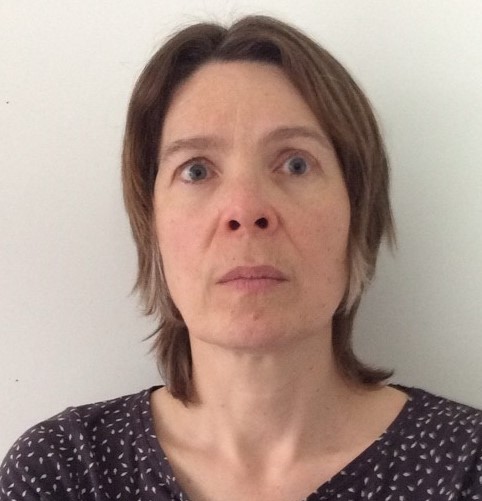
Kirstyn Radford
University of Hull
See Biography
Kirstyn is the Library’s Research Outputs Specialist at the University of Hull, and a Chartered member of CILIP. Before taking up her current post in 2019, she worked in research support and academic liaison teams at York and Leeds, and as a library assistant at Nottingham. She studied for her MA Librarianship at Sheffield.
16:00 – 16:45
Evaluating information in the age of AI: introducing the TRYangle Approach – Mike Jones
As generative AI transforms research and information practices, responsible AI use and critical evaluation are increasingly important. This session introduces two complementary frameworks: PACT (Purpose, Appropriateness, Contribution and Transparency), a framework for making reflective decisions about generative AI use, considering the researchers role and position within their research; and the TRYangle, a model for evaluating information that combines fact-checking, reflections on how information reaches us, and our position within the information exchange. Through practical applications and discussions, we’ll explore how these frameworks strengthen information and AI literacy while keeping human judgement and critical thinking at the centre of research practice.
Thinking with AI – Using Generative AI to structure and communicate research Simon Strange & Jenny McGarvey
This presentation will explore how to utilise Generative AI in a trustworthy manner to support the development of research projects. It will introduce elements needed to be taken into consideration when using Gen AI in a research environment, concentrating on the PACT framework (Purpose, Appropriateness, Contribution and Transparency) as a tool for effective, human centred utilisation.

Mike Jones
Southampton Solent University
See Biography
Mike Jones is an Academic Engagement Librarian at Southampton Solent University. His career in libraries spans 21 years so far across both Further and Higher Education. Throughout this time he has maintained an enthusiasm for supporting students in developing information literacy skills and his recent development of the TRYangle Approach sees his first contribution to the wider community in this field
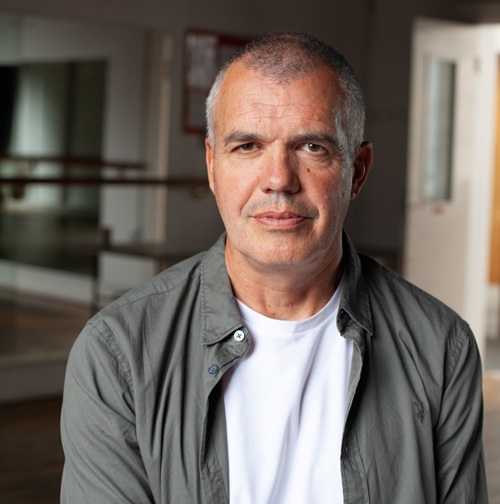
Simon Strange
University of Exeter
See Biography
Simon Strange is Research Dissemination Officer at the University of Exeter. He is also a researcher into music scenes and collective collaborations, previously being a professional musician and head of Education at BIMM. Simon’s PhD looked at the impact of art school education on the creation of popular musicians
Jenny McGarvey
University of Exeter
See Biography
TBC
16:45
Summary & Close
Time
Programme
Speakers
14:00
Open and Welcome
Today’s themes: Trust in people and services, OERs
14:10
Beyond the eTextbook: Building Trusted Services through the OER Programme
The University of Manchester Library plays a vital role in connecting students with trusted learning resources. However, rising eTextbook costs, evolving publisher business models and growing financial pressures are prompting institutions to question the long-term sustainability of commercially licensed teaching content. Libraries must balance affordability, resilience and student access while navigating a rapidly changing supplier landscape. This session explores our response through the development of an Open Educational Resources (OER) Programme, designed to support the adoption, adaptation and creation of OER. We will discuss how a sustainable, trusted service can broaden access and reduce dependence on commercial content

Helen Foster
University of Manchester
See Biography
Helen Foster is Teaching Collections and eTextbook Programme Manager at The University of Manchester Library, where she manages the Reading Lists Online service and the eTextbook Programme, a long-standing service which provides access to core teaching material to students. Helen is now working to expand the remit of Manchester’s Teaching Collections services through the development of a student-centred, sustainable, OER Programme, building relationships with academic colleagues to support open, flexible, inclusive and digitally-enabled teaching
14:40
Trust as a working practice in Content and Digital Transformation
.Successful change is rarely just about systems, workflows or data, it’s about people and culture. Trust and rapport take time to build but can support having challenges conversations and implementing effective change. In this short reflective talk, I will explore why building trust has become an important part of my role as Head of Content and Digital Transformation at Aston University.
The talk will offer a practical, personal perspective on trust as a working practice within library and information services. It will consider how openness, consistency and empathy help build credibility with colleagues, academics, suppliers and senior stakeholders; how strong relationships support better decision-making; and how trust enables professionals to lead change without losing sight of the people affected by it. For a sector shaped by collaboration, shared infrastructure and continual digital change, I will argue that establishing trust is what makes transformation sustainable.
Deena Maggs
Aston University
See Biography
TBC
15:20
Research data management: Reviewing and implementing a new approach across a merged institution
. The merger of two HE institutions – City, University of London and St. George’s, University of London- provided a challenge and opportunity to review research infrastructure, workflows, and systems. The aim is to deliver a new approach for the merged institution against a background of organisational change, the upcoming REF, and growing concerns in the sector about research integrity and trust: factors that gave some urgency to the project.
The presentation will outline how the library took the lead in mapping and understanding ‘legacy’ practices and infrastructure across the two sites and identifying issues and opportunities. Research data management was identified as the first key element to be addressed. Existing good practice was considered as well as gaps and opportunities. More broadly, it was necessary to reappraise the concept of research data in the combined institution, including the variety of outputs inherent in practice-based research.
As part of the process a research data ‘maturity model’ was created to document an achievable short term maturity level for research data management and how progress could be made. This approach has value to any HE institution and will be discussed as part of the presentation.
Carly Lightfoot
City St. George’s, University of London
See Biography
TBC
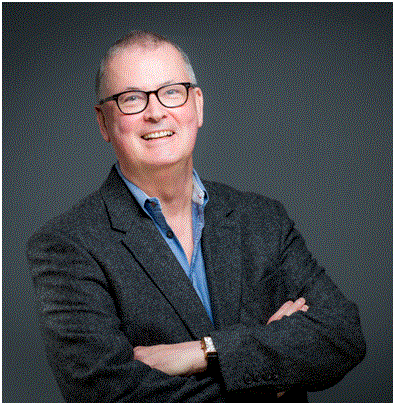
Ken Chad
Ken Chad Consulting Ltd
See Biography
Ken gained his Master’s degree from the Information Science Department at City University in London. He is also an alumnus of the Warwick University Business Innovation and Growth Programme. He worked as a librarian before spending over 20 years in the library technology business. He set up his consulting business in 2007 to help make libraries and archives more effective. He has presented widely in the UK and internationally. Ken has published a number of open access briefing papers on library technology issues and runs Higher Education Library Technology -an open and free community resource.
15:50
Beyond Resource Lists: Using Reading Lists to Build Trust and Improve Student Engagement
By combining curated reading lists, strong academic-library partnerships, and data-informed decision-making, libraries can strengthen their role as trusted partners in teaching and learning while helping students navigate an increasingly challenging information environment. This presentation will explore how reading list management fosters collaboration between academics and library staff. Drawing on experience at the University of Limerick, I will demonstrate how Leganto analytics and reporting can provide valuable insights into student engagement with reading lists. These insights can inform evidence-based conversations with academic staff about resource use, assessment design, and teaching practice. A case study will showcase how one business lecturer redesigned assessments to encourage greater engagement with reading list materials. The result – improved written submissions and credible citations

Jesse Waters
University of Limerick
See Biography
TBC
Jesse Waters is the Librarian, Digital Learning Resources at the University of Limerick (UL). In this role, he supports the delivery of teaching and learning collections with a strong focus on digital formats and access routes. Before this role, Jesse was Librarian for Student Engagement & Student Success at UL, where he provided library support for students and delivered initiatives to enhance undergraduate student transition, retention, and success. He has previously worked at leading Irish higher education institutions including Trinity College Dublin, the Royal College of Surgeons, and University College Dublin.
16:20
Summary and Close
14:00 – 14:05
Open and Welcome
Today’s theme: Scholarly Infrastructure and governance
14:05 – 15:00
Building trust in research: from reporting standards to research provenance
.
Elizabeth Moylan
Wiley
See Biography
TBC
15:15 – 15:45
Making Trust Visible: Progress Report on a Project to Create Shared Infrastructure for Human and Machine Verification
Toby will present a progress report on the initial phase of building TrustMarc Initiative’s shared infrastructure that will enable trusted stakeholders in the scholarly communications community issue certificates – which are both human and machine-readable – that will contain trust narratives for publications and curated items. The initial phase includes a set of development partners – comprising scholarly publishers, university librarians, 3rd sector organisations, and IGOs – who are working with the TrustMarc Initiative on workflows and building a central registry. The aim is to complete the development phase by the end of Q1 2027 before looking ahead to a more general roll out in 2027. For more information, visit: trustmarc.org.
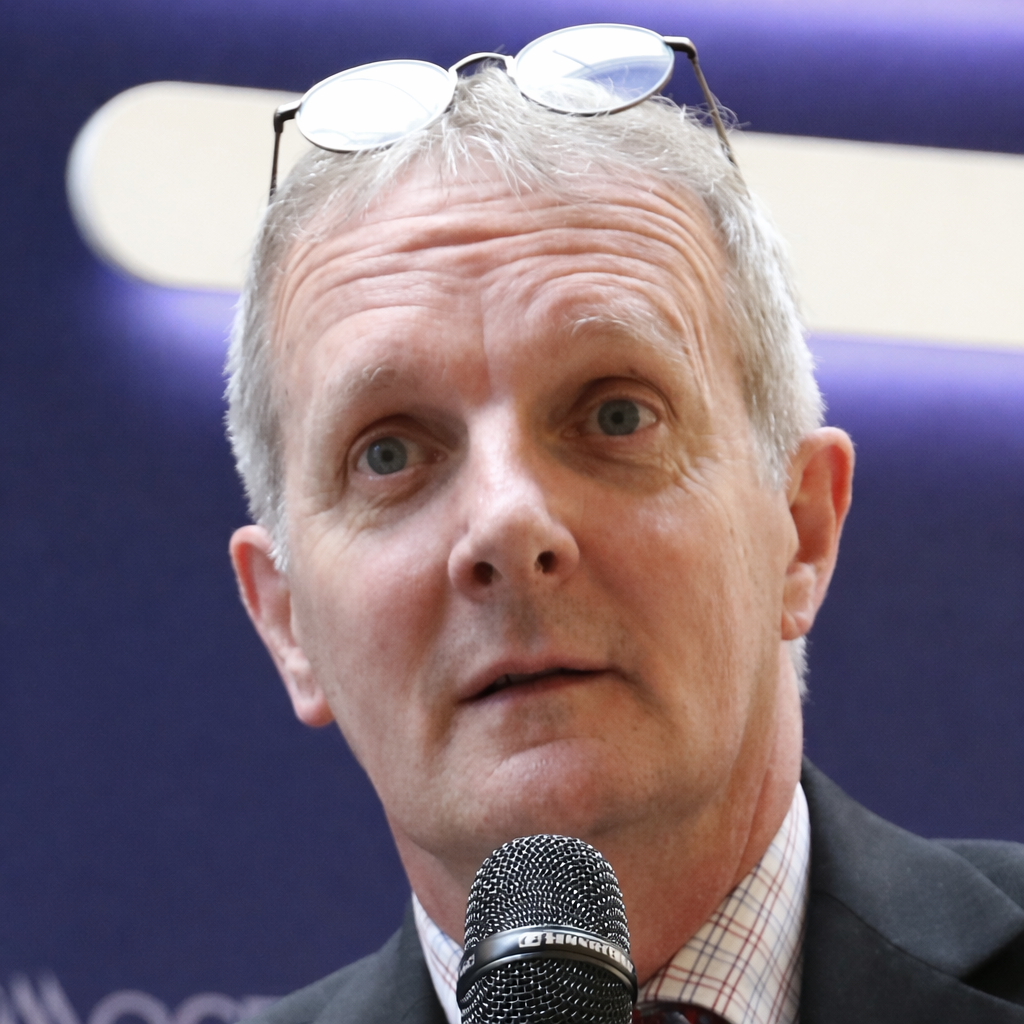
Toby Green
TrustMarc Initiative
See Biography
Toby GREEN, Executive, The TrustMarc Initiative and Co-Founder & Publisher, Coherent Digital has worked in scholarly, policy and professional publishing for more than 40 years. Prior to founding Coherent Digital in 2019, he held a variety of senior roles with OECD, Elsevier and Pergamon. Having published reports, books, journals and data, he is now focusing on trusted real-world knowledge for real-world impact. He is a regular speaker at scholarly communication events and serves on the Board of Annual Reviews.
15:45 – 16:15
Defining a Trusted AI: a key element for electronic resource acquisition
Sébastien Perrin
Couperin.org / Ecole des Mines de Paris-PSL
See Biography
TBC
16:15
Summary and Close
Feedback
Excellent value for money.
Some interesting points were raised it made me aware of issues I had not considered before.
Very good content and speakers covering important perspectives, often overlooked.
Registration
£ 50.00
+10.00 VAT
Single Ticket – Member
£ 100.00
+20.00 VAT
Watch Party Ticket – Member
NB: UKSG reserves the right to alter or vary the programme due to events or circumstances beyond its reasonable control without being obliged to refund monies.
Contact
General queries – events@uksg.org
Please take a look at our code of conduct
Cancellations
The closing date for cancellations is Friday 13th November, after which date cancellations will not be eligible for a refund. Cancellation should be sent into writing to events@uksg.org. All registrants will be sent a link to the recording after the event for their personal viewing.
https://www.uksg.org/terms-and-conditions/The UKSG terms and conditions can be found here