
Understanding Resource Discovery: Archives and Primary Sources Content is a new seminar that aims to expand participants’ knowledge and understanding of the challenges of a successful discovery experience related to specific content types. This seminar is the first of what we hope will be a series of online seminars exploring the particularities and challenges of discovery with different kinds of content types by their format or business models. This seminar will take place over two half days on Tuesday 11th November and Wednesday 12th November.
When
Tuesday, November 11, 2025 – 10:00 GMT
to
Wednesday, November 12, 2025 – 16:00 GMT
Where
Online
United Kingdom
About
Sponsors
Programme
Feedback
Registration
Contact
Share
About the Event
Registration
Click here to register.
Summary
Archives provide valuable access to the past, enabling educators and researchers in the humanities and social sciences to incorporate historical collections into their work. Primary source archives are invaluable for research and learning, encapsulating entire historical periods through diverse content like manuscripts, images, and publications.
This course explores the discoverability of Primary Source content through the use of metadata, libraries’ experiences in managing primary sources in their discovery services, and how publishers and system vendors can contribute to the overall discoverability of these eResources.
The course examines the entire process from the reader’s perspective and addresses some of the subtleties associated with the content of different primary sources, such as manuscripts.
Who should attend?
This course is valuable to anyone dealing with primary sources and archives e-resources in libraries, content providers and intermediaries in the information chain. While not providing detailed technical solutions to specific problems, it imparts a higher level of understanding as to why the related practices and technologies have developed into their current state. It is suitable for anyone working with e-resources in general or those managing departments responsible for institutional archives collections.
This course does not compare specific incarnations and brands of library systems and solutions.
Course Level and previous knowledge required
If you are an early-career professional or new to the discovery area, it may be worth attending the UKSG Introduction to E-Resources and/or An Introduction to Resource Discovery first. Otherwise, no previous knowledge is required.
Learning objectives
- Understand the Primary Sources and Archives content discovery journey
- Understand the library’s role in the discoverability of Primary Sources and Archives
- Understand the common problems and limitations in library technology related to the discovery of Primary Sources and Archives
Pre-event checks
To test your system ahead of time visit https://support.goto.com/webinar/system-check-attendee
Social
Follow the conference on X formally Twitter @UKSG
Visit the event on Linkedin here
Recording
The sessions will be recorded and available to all registered delegates after the event, so if you unable to join us live or want to review any presentation this will be available.
Accessibility
At UKSG, we are committed to ensuring an exceptional experience for all our delegates. Our aim is to make presentations as accessible and inclusive as possible.
Here’s how we achieve that:
- Closed Captioning Options: Our GoToWebinar application allows you to toggle closed captioning on or off during live sessions. You can also customise the text size and colour to suit your preferences.
- Auto-Generated Transcripts: For each recorded session, we can provide auto-generated transcripts on request.
If you have particular accessibility requirements or questions about this event, we strongly encourage you to contact events@uksg.org as soon as possible.
Programme
- Tuesday 11 November
- Wednesday 12 November
Time
Programme
Speakers
10:00
Introduction & welcome
All times stated are BMT
More details to follow
Anja van Hoek
Amsterdam University Press
See Biography
tbc
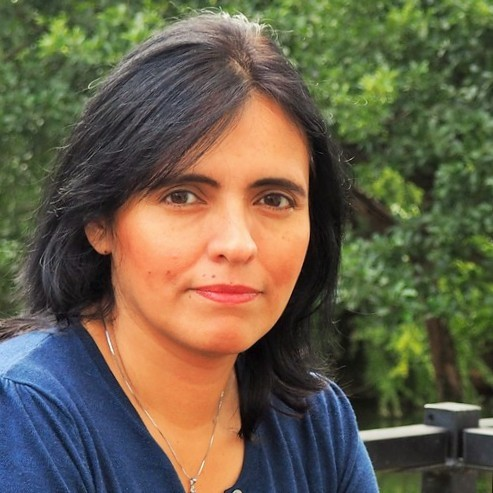
Magaly Taylor
Gale part of the Cengage Group.
See Biography
Magaly Taylor has over 15 years of experience in Discovery, Metadata, and Usage in libraries, content providers, and service providers. She has worked in various types of libraries and contributed to different metadata working groups and committees internationally, including ABES-SC in France, NISO in the US, and UKSG in the UK. Currently, Magaly is the Discovery and Usage Manager for Gale, which is part of the Cengage Group. She is an active member of the UKSG Education Committee; in 2024, she was elected a UKSG Trustee.
10:15
The Role of Metadata for Archival Discovery
This presentation examines the central role of archival metadata in enhancing discovery and access, drawing on insights from Metadata and Archival Discoverability: Driving Use of the Philip Mackie Collection at Southampton Solent University (Clark & Alemu, 2025). It explores key archival metadata concepts, including principles of archival description, entity relationships, authority control and subject headings. The presentation highlights the application of core archival standards, such as (ISAD(G), EAD, ISAAR(CPF) and Library of Congress Subject Headings), underscoring their importance in producing consistent, accurate and interoperable archival descriptions which impact discovery and usage. Recommendations will be made on practical approaches to archival metadata creation and enrichment, including the “More Product, Less Process” (MPLP) methodology for addressing cataloguing backlogs (Greene and Meissner, 2005). The presentation will also contrast the descriptive needs of archival materials with those of published resources and consider emerging standards and technologies shaping the future of archival metadata. The Q&A will offer a chance to learn from each other, share best practices, and explore ways to drive discovery and usage.
Getaneh Alemu
Solent University
See Biography
Getaneh Alemu (PhD) is a Cataloguing & Metadata Librarian at Southampton Solent University (since 2014), bringing over 20 years of experience in higher education and libraries. His primary role focuses on creating and harnessing metadata for print and digital resources, ensuring metadata is up-to-date, accurate, usable and standardised. Getaneh holds a PhD in Metadata for Digital Libraries (University of Portsmouth, 2014), an MA in Digital Library Learning (Oslo University College, 2009), an MA in Knowledge and Information Management (Ghent University, 2005) and a BA in Library and Information Science (Addis Ababa University, 2001). He served on IFLA’s Linked Data Technical Review Group (LIDATEC, now METATEC) and is on the editorial boards of Journal of Librarianship and Information Science, International Journal of Metadata, Semantics and Ontologies, and Digital Library Perspectives. Getaneh’s key publications include: “Metadata Standards and Models” (Elsevier, 2024) “The Future of Enriched, Linked, Open and Filtered Metadata” (Facet, 2022) “An Emergent Theory of Digital Library Metadata: Enrich then Filter” (Chandos, 2015) Links: Google Scholar: http://scholar.google.co.uk/citations?user=WX3KZOkAAAAJ&hl=en Slideshare: https://www.slideshare.net/getaneh/presentations ORCID: http://orcid.org/0000-0003-2424-1725
11:15
Break
11:30
Improving the discoverability of Archive and Museum Collections
This presentation explores recent enhancements to the discoverability of archive and museum collections within the discovery layer. It highlights the technical processes involved in harvesting metadata from native archival systems and integrating it into a unified search environment. These changes can be used to surface these rich and often underrepresented resources, the session will demonstrate how these improvements have contributed to greater visibility and accessibility. Attendees will gain insights into the challenges and solutions associated with making archival materials more discoverable to researchers, students, and the wider public
Andrew Dove
Natural History Museum
See Biography
Andrew Dove has over 15 years of experience in Discovery, Systems and Metadata. He has worked across various types of libraries including Museums, NHS and Higher Education. He is currently the Digital Systems Librarian for the Natural History Museum.
12:30
Summary and Close
Time
Programme
Speakers
13.30
Welcome and Introduction
Magaly Taylor
Gale part of the Cengage Group.
See Biography
Magaly Taylor has over 15 years of experience in Discovery, Metadata, and Usage in libraries, content providers, and service providers. She has worked in various types of libraries and contributed to different metadata working groups and committees internationally, including ABES-SC in France, NISO in the US, and UKSG in the UK. Currently, Magaly is the Discovery and Usage Manager for Gale, which is part of the Cengage Group. She is an active member of the UKSG Education Committee; in 2024, she was elected a UKSG Trustee.
Anja van Hoek
Amsterdam University Press
See Biography
Anja van Hoek has recently joined the organisation
Her previous role was as a Program Manager Online Resources at Brill, where she is overseeing Brill’s online publishing program. A major part of her role is the coordination of the various aspects – relating to Brill’s online publishing program – between publishing, sales and marketing. Working closely with the Data and Platform Teams within Brill’s Operation department she plays an important role in monitoring usage data.
13.40
Supporting archival research by providing metadata and advanced search options
Using an online copy is quite different from accessing the original source. 24/7 availability at the desktop is an important, but perhaps the least of the advantages of the online copy. Consulting primary source materials can be supported by offering advanced search options. De Gruyter Brill publishes over a 100 research collections. How we support academic research is explained using concrete examples.
Frans Havekes
de Gruyter Brill
See Biography
Frans Havekes is managing the conversion of content to concrete publications at de Gruyter Brill. Besides regular books and journals, this responsibility comprises the publication of research collections. He has been involved since 2000 in scanning original resources, metadata development and enrichment of the digital, online copy.
14.05
Context is Not a Keyword: Rethinking Discovery for Humanities Research.
Archival materials resist simplification, yet discovery services depend on it. As a result, the richness of historical collections is often flattened into metadata that conceals rather than reveals their value. This talk explores how discovery systems quietly distort the visibility of primary sources and what libraries can do about it: rethinking how value is demonstrated, how engagement is framed, and how archival research is championed within the broader ecosystem of digital scholarship.
Chris Houghton
Gale
See Biography
Chris Houghton is Head of Academic Partnerships at Gale where he leads much of Gale’s collaboration with the global DH and wider academic community. As well as working with scholars to support research and teaching, Chris runs the Gale Fellowship Program which provides financial and research support to a number of researchers every year. Most of Chris’ career has been spent in publishing and software companies – he began his Gale career as a trainer and over the past 15 years has held leadership roles in sales, training, marketing, and now product development.
14.30
Joint Q&A
14.40
Break
15.00
Using AI to Improve Access and Enhance Discovery Capabilities in Archival Collections
Artificial Intelligence (AI) can improve access and enhance discovery of manuscript collections in innovative ways. While AI is broadly discussed in our professions, particularly its dangers, there is little information available on what facets of AI might be useful to us and how to access them. This session answers those questions, presenting the results of a multi-year study applying AI tools to the William Elliot Griffis collection at Rutgers University Libraries. In collaboration with Durham University UK, sixty plus software methods were tested on untranscribed handwritten and typewritten documents and photographs. The tools produced narrative descriptions, identified hidden patterns, and suggested new ways to organize the material. Attendees will gain a clearer understanding of AI’s capabilities as well as the limitations and ethical considerations. The session will show how AI can expand discovery and access of primary source material for information professionals, researchers, and educators
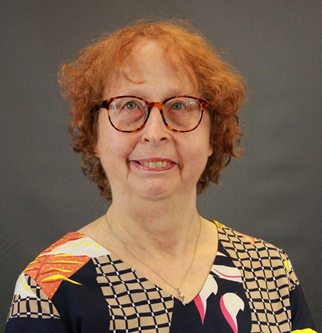
Sonia Yaco
Rutgers University
See Biography
Sonia Yaco (she) is the Emerging Technologies Librarian for Rutgers University Libraries. She has led special collections and university archives departments at Rutgers University, University of Illinois at Chicago and Old Dominion University. Prior to academia, Yaco headed a computer consulting firm serving libraries, educational institutions, and Fortune 500 companies. Her research examines innovative methods to improve the discoverability of archives using emerging technology. Yaco’s scholarship is used in graduate education programs in the US and UK. She holds a M.A. from the School of Library and Information Studies and a B.A. in Sociology, from the University of Wisconsin – Madison
16.00
Summary and Close
Previous delegate
Registration
Monday, July 28, 2025 – 00:00 BST – Tuesday, September 23, 2025 – 13:00 BST
£ 70.00
+14.00 VAT
Member
£ 82.00
+16.40 VAT
Non-Member
NB: UKSG reserves the right to alter or vary the programme due to events or circumstances beyond its reasonable control without being obliged to refund monies.
Cancellations
The closing date for cancellations is Friday 17th October noon, after which date cancellations will not be eligible for a refund. Cancellation should be sent into writing to events@uksg.org. All registrants will be sent a link to the recording after the event for their personal viewing.
The General UKSG booking terms and conditions can be found here