
This intermediate-level seminar examines the evolving landscape of Open Access publishing, focusing on its challenges, opportunities, and sustainability in financially constrained times, while exploring strategies to broaden access and enhance discovery. This seminar will take place over two half days on Monday 8th and Tuesday 9th December.
When
Monday, December 8, 2025 – 10:00 GMT
to
Tuesday, December 9, 2025 – 13:00 GMT
Where
Online
United Kingdom
About
Sponsors
Programme
Feedback
Registration
Contact
Share
About the Event
Registration
Registration has now closed
Course Summary
Open access publishing provides a vital avenue for disseminating research, by ensuring that valuable research remains widely accessible to all, regardless of resources. This model can enhance collaboration and innovation, enabling researchers to share findings quickly and broadly in challenging economic conditions. This course will give an intermediate overview to this area. In particular it will:
- Explore the evolving landscape of Open Access publishing within the context of financial challenges faced in current times.
- Give focus to the specific challenges and opportunities associated with open access publishing.
- Look at options for the discovery of Open Access resources.
- Summarise what can be done to make Open Access more universal.
- Investigate the sustainability of big-deals and Gold Open Access in general.
- Look at the role of repositories and how these can potentially pug the gaps in Open Access provision.
- Explain how new policies and initiatives (e.g. Right Retention) are continuing to affect open access publishing.
Course Level and previous knowledge required
This course offers an intermediate level overview and it is anticipated that you would have some previous knowledge about the subject matter.
Please note that this is not a detailed practical or technical course and it will not go into detail about how specific services or systems function, or how to optimise workflows. Instead the course gives a high-level, intermediate overview of the essential elements of processes and systems, providing the conceptual foundation for other more specific training in the use of particular services and systems.
Learning objectives
By the end of this course, participants will be able to:
- Understand the evolving landscape of Open Access publishing, particularly in the context of current financial pressures.
- Be able to identify key challenges and opportunities associated with implementing and supporting OA publishing models.
- Explore effective strategies for discovering and accessing Open Access resources.
- Evaluate the sustainability of transformative agreements, including big deals and Gold Open Access models.
- Summarise approaches to broaden the global reach and inclusivity of Open Access.
Pre-event checks
To test your system ahead of time visit https://support.goto.com/webinar/system-check-attendee
Social
Follow the conference on X formally Twitter @UKSG
Recording
The sessions will be recorded and available to all registered delegates after the event, so if you unable to join us live or want to review any presentation this will be available.
Accessibility
At UKSG, we are committed to ensuring an exceptional experience for all our delegates. Our aim is to make presentations as accessible and inclusive as possible.
Here’s how we achieve that:
- Closed Captioning Options: Our GoToWebinar application allows you to toggle closed captioning on or off during live sessions. You can also customise the text size and colour to suit your preferences.
- Auto-Generated Transcripts: For each recorded session, we can provide auto-generated transcripts on request.
If you have particular accessibility requirements or questions about this event, we strongly encourage you to contact events@uksg.org as soon as possible.
Programme
- Monday 8th December
- Tuesday 9th December
Time
Programme
Speakers
10.00
Introduction & welcome
All times stated are GMT
Sarah Beighton
Staffordshire University
See Biography
tbc
10.10
Future of Transformative Agreements
An overview of the evolution of Transformative Agreements: their origins, current landscape, and possible futures
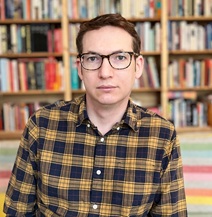
Gary Steele
Glasgow Caledonian University
See Biography
Gary was appointed Head of Library Services at Glasgow Caledonian University in 2024, providing strategic and operational leadership for the Sir Alex Ferguson Library. He began his career in 2005 at Trinity College Dublin, followed by roles at the National Maritime Museum Greenwich and the British Museum. Since 2011, he has held a range of systems, management, and leadership positions at Glasgow Caledonian University. Gary has a strong interest in promoting sector-wide collaboration and shared services and has worked closely with colleagues across the UK to share best practice. Through his involvement with the Scottish Higher Education Digital Library (SHEDL) Journals and Learning Content groups, the Scottish Confederation of University & Research Libraries (SCURL), Advanced Procurement for Universities and Colleges (APUC), the Jisc Library Purchasing Coordination Group, and the Jisc Publisher Negotiations Expert Group, he has contributed to shaping a more open, affordable, and transparent market for library resources and services.
10.50
Achieving Financial Sustainability Through Enhanced Green OA
Against a backdrop of financial uncertainty across the sector, the cost of achieving open access for journal articles continues to rise. Investment in so-called transformative agreements has not delivered the transition envisaged, and hybrid open access remains the dominant (problematic) route. Green OA may offer a more financially sustainable alternative, particularly as rights retention policies remove embargoes and allow immediate deposit of AAMs. Yet Green OA still carries an image problem around discoverability and quality. This presentation will outline how Manchester is exploring an enhanced Green OA model, and how sector-level collaboration could help address longstanding barriers and support a more sustainable route to open access.
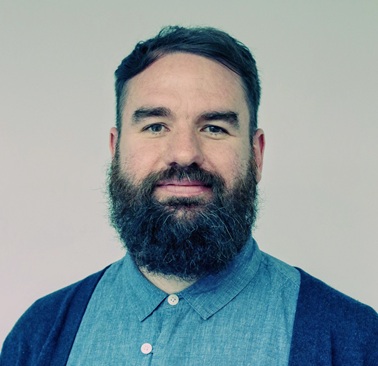
Stephen Carlton
University of Manchester
See Biography
| Steve Carlton is an Open Research Librarian in the University of Manchester Library’s Office for Open Research. He recently marked ten years working in open access, following roles at the University of Liverpool and the University of Salford. In his current role he’s responsible for the Library’s Open Access service, which helps to share thousands of research outputs open access each year. He’s interested in harnessing the power of open access to help researchers to reach broader audiences, the development of more sustainable routes to open access and the intersections between open access and other open research practices. And dorky metadata stuff. He’s on LinkedIn: https://www.linkedin.com/in/steve-carlton-478521159/. |
Scott Taylor
University of Manchester
See Biography
| TBC |
11.30
Break
11.45
Beyond the budget crisis: A publisher’s view on sustainable Open Access
As libraries and institutions face financial pressures and evolving funder mandates, the scholarly publishing ecosystem must adapt while building on proven approaches. This session explores how Wiley advances established models like transformational agreements and gold open access while developing strategic innovations that respond to economic uncertainty and shifting policy requirements. Drawing on experiences across Europe, Asia, and the Americas, we’ll examine how both traditional and emerging approaches are evolving, what adaptations stakeholders seek, and how partnerships between libraries and publishers can balance multiple demands with maintaining momentum toward OA goals
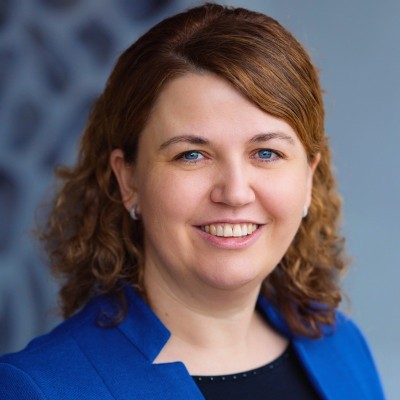
Melanie Lehnert-Bechle
Wiley
See Biography
Melanie Lehnert-Bechle brings over 16 years of scholarly publishing experience to her role leading Wiley’s global Open Research team. Prior to joining Wiley, she spent more than a decade at Springer Nature in progressive roles spanning trade and institutional sales, marketing, and external communications. At Wiley, she led the Go-To-Market strategy for the ground-breaking transformational agreement with the DEAL consortium in Germany in 2019. Since 2022, she has worked in Wiley’s Research Publishing team on OA business models and policies, and stakeholder engagement. Passionate about Open Research, Melanie enjoys connecting with various groups across the research ecosystem
12.25
The discovery of open access resources
At DOAJ, our vision is to build an equitable and diverse scholarly ecosystem where trusted research can be accessed globally without barriers. For a large part of our user group, financial uncertainty is a normal, everyday reality. It is therefore vital that we continue to provide our key review services—reviewing journal applications and indexing trustworthy open access journals—and our open metadata services. Open metadata is the key that unlocks equitable access to knowledge and that allows information to flow freely around the world. This presentation will illustrate our role in that process and the strategies we use to maximise the discoverability of open access information.
13.10
Summary and close
Time
Programme
Speakers
10.00
Welcome and Introduction
Jon Cook
University of York
See Biography
tbc
10.05
Rights retention in a time of financial uncertainty
Rights retention strategies have increasingly been adopted by researchers, funders, and research organisations as a way of maximising the reach of research and meeting open access expectations. In times of financial uncertainty, it becomes even more important that researchers and research organisations can assert and retain the rights to openly disseminate scholarly works that they produce or support. This presentation will outline the development of rights retention strategies, particularly in the UK, and share the experience of University of York in implementing rights retention at a time of uncertainty and rapid change in scholarly publishing.
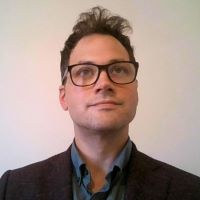
Thom Blake
University of York
See Biography
Rights retention strategies have increasingly been adopted by researchers, funders, and research organisations as a way of maximising the reach of research and meeting open access expectations. In times of financial uncertainty, it becomes even more important that researchers and research organisations can assert and retain the rights to openly disseminate scholarly works that they produce or support. This presentation will outline the development of rights retention strategies, particularly in the UK, and share the experience of University of York in implementing rights retention at a time of uncertainty and rapid change in scholarly publishing
10.45
Reshaping our Approach to Open Access for Books in the New World Order
In this session Dr Frances Pinter will argue that the consequences of the new world order, that are only just now unfolding, require new approaches and advocacy to open access, especially for books. She will be drawing specifically on her experiences as founder of Knowledge Unlatched and her current work with the Opening the Future model. She will also draw on her work in the post-communist countries in Central and Eastern Europe and the former Soviet Union.
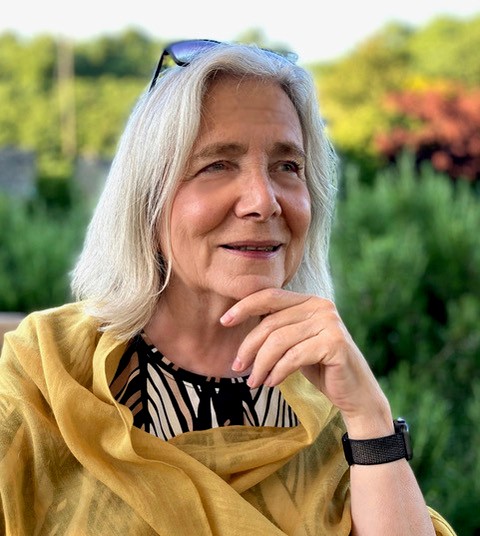
Francis Pinter
Central European University Press
See Biography
Dr Frances Pinter is Director, Academic Relations at the Central European University Press and formerly CEO of Manchester University Press. She advises several small university and mission driven presses around the world. She was the founding Publisher of Bloomsbury Academic and the founder of Knowledge Unlatched, taking a particular interest in developing sustainable OA business models. Previously she was Publishing Director at the Open Society Institute (now Open Society Foundations) where she worked in all the post-communist countries and was instrumental in the founding of EIFL. She is a visiting research fellow at the School of Advanced Study, University of London and recently founder of SUPRR (Supporting Ukrainian Publishing Resilience and Recovery)
11.25
Break
11.40
The next steps to achieve Open Access – views from a research funder
While the Swedish system with joint nehgotiations with publishers have led to high rates of open access publishing, it has also meant an increas in cost. To address this tha posible path beyond transformative agreements have been discussed, and a plan is being implemented. I will give a brief overview of this development and the role of research funders in the Swedish context.
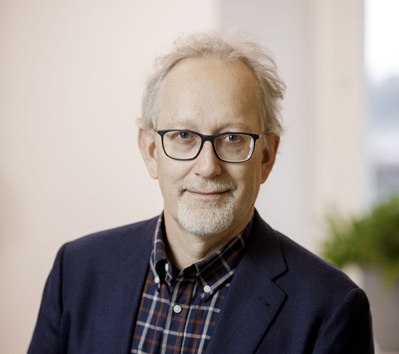
Olle Lundberg
Forte -Swedish Research Council for Health, Working Life and Welfare
See Biography
As a professor of Health Equity Studies at Stockholm University, Lundberg has contributed to the understanding of how social determinants generate health inequalities, as well as to the policy development in Sweden and elsewhere. As a Secretary General for one of Sweden’s public funders of research, he has worked to promote Open Access in collaboration with other funders, universities and the National Library in Sweden, but also internationally through cOAlition S.
12.20
Panel/Discussion Session
13.00
Wrap up and Close
£ 70.00
+14.00 VAT
Member
£ 82.00
+16.40 VAT
Non-Member
NB: UKSG reserves the right to alter or vary the programme due to events or circumstances beyond its reasonable control without being obliged to refund monies.
Cancellations
The closing date for cancellations is Friday 28th November, after which date cancellations will not be eligible for a refund. Cancellation should be sent into writing to events@uksg.org. All registrants will be sent a link to the recording after the event for their personal viewing.
The General UKSG booking terms and conditions can be found here