
9 January 2026
Jenny McHugh, Research Data Manager at Lancaster University

How do we cultivate data communities? The research data management (RDM) field has increasingly emphasised the importance of data stewardship networks to support data professionals. The recently launched ‘Careers and Skills for Data-driven Research’ (CaSDaR) supports data stewards through events, funding, and training. As Tristan Martin wrote about in November, the University of Manchester is also currently working on a research data stewardship project, other organisations have launched cross-institutional networks, while Sonraí, the Irish Data Stewardship Network, takes a national-level approach. The key to these initiatives is financial resources to support grants, events, and community engagement. For medium-sized universities like Lancaster — research-intensive but with limited resources — creating such a community can be tricky.
Engagement with our RDM services have been declining since the pandemic. As Joanne Fitzpatrick noted in a UKSG editorial in 2022, previously our services focused on being a ‘friendly face’ for a complex field. Using initiatives such as Data Conversations, an informal series of talks focused on ‘data stories’ and accompanied by pizza, we brought out the ‘human aspects of Research Data Management’. From 2020, these in-person events struggled to gain traction online or in hybrid settings. As Jo wrote, the ‘time for eating free pizza… seems lost to the pre-pandemic world.’
What were the main challenges?
- Gradual declining attendance at data conversations and training sessions.
- Increasing workload pressures on academics, limiting their ability to participate in open research, which is often perceived as an optional extra.
- Personnel changes to the Open Research team and academic staff, leading to a disconnect.
Additionally, there seemed a disinclination to come into the library and attend in-person events about RDM in the same way researchers had in 2019. Instead, we needed to seek out new collaborators and make the case that RDM is a fundamental part of responsible research practices and ethics. My approach has focused on:
- Seeking new partnerships and formalising for long-term sustainability.
- Embedding the service within departments, faculties and services to demonstrate research data is integral.
- Remodelling our training offer.
- Experimenting with different formats.
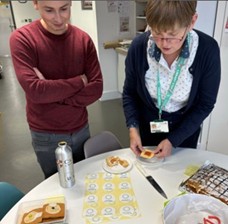
The first step was to consult our existing network. We had a pre-existing relationship with the Centre for Digital Humanities and contributed to several of their projects, hosted on Lancaster Digital Collections. However, we didn’t have an established reoccurring event that we partnered on, where researchers and library staff could connect. World Digital Preservation Day provided an opportunity because it speaks to themes that digitisation projects, research data management and data-driven research often tackle, such as how to ensure long-term accessibility to digital objects. To celebrate this day in 2024, I facilitated 2 panels composed of Lancaster’s digital humanities researchers, librarians and archivists to discuss common challenges for preservation at Lancaster. This was accompanied by a library staff baking competition to raise awareness about how to preserve our in-house data. Staff were tasked with baking ‘at risk’ hardware or file formats.
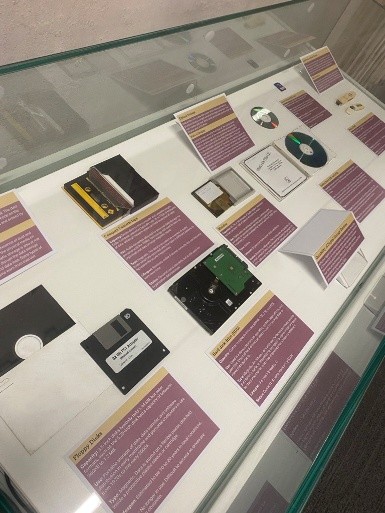
In 2025, our focus turned outward and we invited Abbie Brennan, technical officer to the North West Film Archive, to talk about preserving audiovisual materials (physical and born-digital). She enthused our film and digital humanities students about the possibilities of working in digital roles in libraries and archives. This was accompanied by an exhibition of obsolete hardware to raise awareness about our preservation work to library visitors.
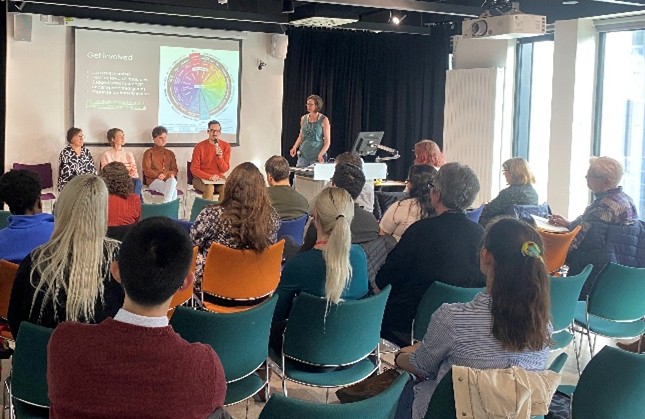
Our newest partnership is with the Data Science and AI Institute at Lancaster (DSAIL), which brings together researchers across all faculties working on data-driven research. After attending a conference with its members in January 2025, I became a member, attended a workshop on AI, joined the newly formed Diversity in Data Science working group and hosted their launch in our events space. They then invited me to be a deputy lead for their data engineering theme, which aims to support increasing demand for research computing support, to formalise their partnership with the library and collaborate on training provisions.
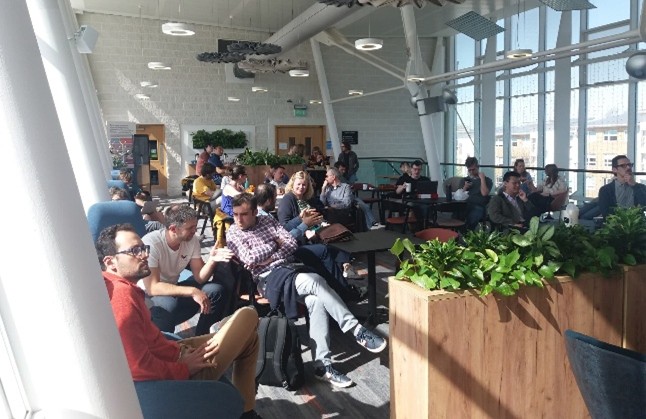
Since then, we’ve co-authored library guides on data issues, run funding application workshops for data-driven projects and contributed to their Data Dialogues series — an informal, discussion series to foster interdisciplinary conversations about data. This led to greater contact with the High-Power Computing cluster and understanding of the data management issues researchers in this space experience, such as storage and licensing code. As a result, I’ve been working with the Research and Enterprise team to review the current Intellectual Property policy to make it more flexible for researchers’ licensing needs for data, code and digital objects. The Institute’s connection with the N8 Centre for Computationally Intensive Research has also led to increasing contact and collaboration with RDM leads across the north of England via knowledge exchanges and events, such as the sensitive data workshop organised in October 2025. Engaging within existing data communities at Lancaster therefore has been key to increasing engagement and solving ongoing issues for data stewards.
Aside from these partnerships, embedding the RDM service within other processes became a top priority to demonstrate that good data practices are essential to responsible research. The question was, how could we reach those individuals struggling with data management? I began by looking at compliance methods, such as the ethics approval process.
Thanks to the increasing research profiles of our library staff applying for ethics approval to conduct their projects, I was invited to contribute to the joint ethics committee for the Management School and the Faculty of Humanities, Arts and Social Sciences. This position became a catalyst for change as regular contact with reviewers and applicants helped me identify the most common recurring misconceptions about data management and try to resolve them. I worked with the Ethics Officers in the Research Services team to review and rewrite the research data questions in the ethics approval form, signposting to relevant guidance. I also approached our Records Retention Officer in the Information Governance team, and we put together a research data retention model to assist researchers working with personal and/or sensitive data to better understand when to curate, anonymise and share data. This has just been reviewed by various stakeholders across professional services and academic departments and will be published later this year.
I then experimented with this approach to improve our training offer. From the academic year 2024/2025, we embedded the Open Research training sessions within the ‘Library Skills @ Lancaster’ package run by our Faculty Librarians and sought to standardise each workshop so they reoccurred every term. We worked with the Research Services team to get our training sessions promoted through their communications channels such as an app called Inkpath that targeted postgraduate research students, as well as publicising these events via our partners, such as DSAIL and the Centre for Digital Humanities. This led to a high number of signups for the RDM sessions (a total of 108 across 2 sessions in 2024/5). However, there was a drop off between the number of signups and those that attended – only about a third attended each session and these were mostly all research students.
Instead, the best engagement came from training sessions that were targeted to individual departments such as Chemistry, Politics, Philosophy and Religion, and the Medical School, or research groups, such as the Space and Planetary Physics Group because it allowed me to provide bespoke advice for individual disciplines. In each instance, this led to follow up emails and requests for data management plan reviews from attendees, demonstrating engagement with the service. This approach has therefore gleaned more success, although (in the interest of transparency) take up from departments across the 4 faculties remains inconsistent.
Overall, engaging researchers with RDM best practices continues to be challenging. This includes accessing full-time academic staff with limited time and tackling the divide between event registrations and attendance. Increasingly, we’ve been seeking new ways to conceptualise data as a broader term that encapsulates everything from spreadsheets and transcripts to videos of performances, digital objects like 3D scans and more. This has increased our contact with researchers working on impact and public engagement projects, and I received good feedback after presenting at departmental research away days.

As data and the digital objects created by research projects become more complex and diverse, so too must our training offer and engagement, just as the licenses and the platforms that support and host them are becoming increasingly complex and diverse. Hence why we’ve tried to approach our audience in new ways, via exhibitions, networking events and podcasts. Success can be found in surprising places; our May 2025 podcast episode on licensing and the ethical use of AI with Joseph Lindley (who I met at a DSAIL event), has received 431 views on YouTube at the time of writing. The solution, it seems, is to cater to diversity and think more creatively to reach our audiences.
| These views are the authors’ own and do not necessarily reflect the views of UKSG. |
| This UKSG Editorial is taken from the community newsletter UKSG eNews, published every two weeks exclusively for UKSG members. The newsletter provides up-to-date news of current issues and developments within the global knowledge community. To enjoy UKSG eNews and other member benefits become a UKSG member. |