
Programme
Speaker
Group C
Research integrity and open access models: Insights from Retraction Watch and OpenAlex
Research integrity is crucial for fostering trust in scholarship. Despite retractions being a small fraction of the scholarly literature, the impact on undermining trust is significant. Factors like AI, predatory publishers, and paper mills, just to name a few, contribute to research integrity concerns. This presentation focuses on the intersection of OA models, particularly gold and hybrid OA, and research integrity. Using data from Retraction Watch and OpenAlex, this study examined the link of retractions and OA models, including APCs and trends by publisher, journal, subject, country, and reason. The session will show how research integrity intersects with OA publishing.
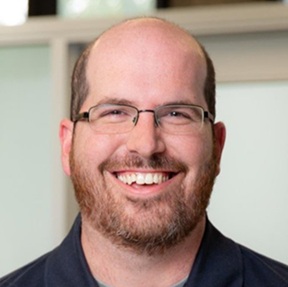
Ben Rawlins
University of Kentucky
Biography
Ben Rawlins is the associate dean for Outreach, Engagement, and Collections at the University of Kentucky Libraries. Ben has served in various leadership roles in academic libraries, including library director at Georgetown College, SUNY Geneseo, and Texas A&M International University. In his current role, Ben leads a diverse portfolio that includes reference services, educational services, collections, acquisitions, liaison services, interlibrary loan, electronic resources, open educational resources, assessment, and the branch libraries (Education, Fine Arts & Design, and Medical Center).
Navigating the storm: How non-APC models are becoming a
lifeline for non-profit publishing sustainability
The proliferation of new, non-APC OA business models reflect pressures on publishers from multiple directions. Libraries seek to save on costs and expect models to be transparent and equitable. Funders demand that publishers bear the burden of enabling un-funded mandates from Plan S to the Nelson memo. Institutions have transferred the burden of research integrity management and monitoring to publishers despite research assessment incentives that drive many of these questionable behaviors.
This panel discussion will focus on how and why non-profit publishers are taking these approaches, the risks involved, how the library community views non-APC models particularly from non-profit publishers, what works/doesn’t, and finally – what the prognosis for long term sustainability looks like for this segment of the scholarly communications ecosystem. This will be a moderated discussion facilitating audience participation.
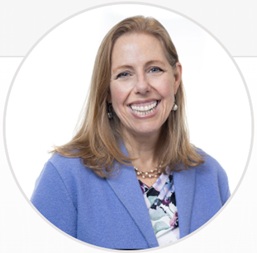
Christine Orr
BioOne
Biography
Christine Orr serves as BioOne’s Senior Director of Business and Community Development, driving strategic initiatives designed to advance the mission of sustainably maximizing access to research. Her portfolio includes leading efforts to achieve revenue targets, driving corporate communications, raising the profile of BioOne among strategic communities, and supporting organizational transformation via the creation of Open Access pathways and product diversification.
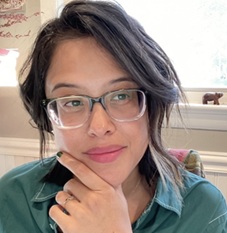
Sara Rouhi
American Institute of Physics (AIP) Publishing
Biography
Sara Rouhi is the Director of Open Science and Publishing Innovation at AIP Publishing. A political science by training, she joined the scholarly publishing community as a publisher starting in 2008 and has been working at the nexus of community engagement, product development and equitable business models
Driving AIPP’s open science strategy, she focuses on developing new publishing models and sustainable business strategies to accelerate AIPP’s mission to advance pragmatic, researcher-focused open science.
Rouhi joins AIP Publishing from Public Library of Science (PLOS) where she held business development and publishing development leadership roles. Her work centers at the nexus of new business models, open science/access, and equity. She’s a vocal advocate for pragmatic, sustainable, community-driven open science strategies. She has a track record of leading agile, award winning teams at PLOS and Digital Science and received numerous awards and recognition for her work in scholarly publishing. After hours, outside of AIPP, she is a free-speech activist and co-author of the Declaration to Defend Research from US Government Censorship alongside the team at DefendResearch.org. She is also long-form improviser in the DC comedy scene and rants on all things #scholcomm, politics, free speech, and comedy on Bluesky @RouhiRoo.bsky.social
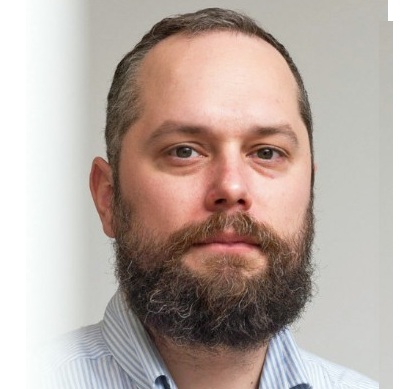
Ádám Dér
Max Planck Digital Library
Biography
Ádám Dér is head of scientific information provision at the Max Planck Digital Library (MPDL), serving researchers at the more than 80 institutes of the Max Planck Society across Germany. In this role, he acts as lead negotiator and collections strategist, prioritizing publisher negotiations to advance the open access transition in scholarly publishing. He also represents the Max Planck Society in a broad range of national and international strategic activities, including Germany’s nationwide DEAL negotiations, in the governing council of SCOAP3, in the Board of the OA Switchboard, and contributes to a variety of international industry boards and initiatives.
Megan Vance
Association for Computing Machinery
Biography
Megan Vance is the Open Access Sales Manager at the Association for Computing Machinery (ACM), overseeing new business sales of ACM Open worldwide. In this role she partners with institutions to support ACM’s recent transition to a fully open access publishing model. Megan has over a decade of experience in scholarly publishing and enjoys advocating for open access while strengthening institutional relationships.
“The Red Thread” at Malmo university: curating collections intertwined with research communication
In Jorge Luis Borges’ The Library of Babel, the library represents an infinite universe filled with mysterious books. While our libraries are more accessible than Borges’, they share the promise of knowledge and discovery found on every shelf. Yet many books remain hidden within large collections.
Our project, “The Red Thread,” aims to bring the printed collection to life and create a dynamic, inviting library space. In autumn 2024, we piloted the concept using our comic book collection by curating selections, front-facing covers, and enlarging artwork to evoke a sense of stepping inside the volumes. A professor of visual communication contributed a research text, displayed alongside a cartoon portrait, and new seating encouraged visitors to read and linger.
The pilot strengthened connections with staff and students and inspired an exhibition of student-made fanzines. By intertwining collections with research, we aim to create a vibrant, democratic space that bridges the university and the city.
Emma Nolin
Malmö university Library
Biography
Emma Nolin is Head of Information Resources and Scholarly Publishing at Malmö University Library, a position she has held for seven years. The library maintains both extensive electronic and physical collections, which are essential for students and researchers alike. While significant development has taken place in the electronic collections, the past two years have seen a renewed focus on the print collections. As the library operates without closed stacks, active management of the physical collection is a key priority.
Emma is a member of the UKSG Education and Events Subcommittee and the LIBER Open Access Working Group. At the conference, she will share how Malmö University Library has approached curating collections in close connection with scholarly communication.
Leading introverts (and being an introverted leader) in libraries and publishing
Leading people who are naturally shy or introverted carries with it certain challenges — ones that may be compounded when you, the leader, tend towards shyness and introversion yourself. Given that the fields of librarianship and scholarly publishing tend somewhat to attract quiet, bookish types who test on the “introverted” end of the introversion-extroversion spectrum, what are some of the challenges that leaders deal with in this space, and what are some ways to meet them? Join a discussion of this topic led by a self-identified “off-the-charts introvert” who has learned from over 20 years’ experience as a library leader
Rick Anderson
Brigham Young University
Biography
Rick Anderson is University Librarian of Brigham Young University. He has worked previously for YBP, Inc., the University of North Carolina, Greensboro, the University of Nevada, Reno, and the University of Utah. He is a regular contributor to the Scholarly Kitchen and has served as president of NASIG and of the Society for Scholarly Publishing. Rick is the author of three books, including _Scholarly Communication: What Everyone Needs to Know_ (which has been published in three languages) and of the twice-weekly blog _Vision & Balance: Leading and Managing in the Academic Library.
Beyond compliance: Academic libraries and the new era of digital accessibility
With the European Accessibility Act now enforced and other international regulations gaining momentum, academic libraries across the UK and Europe are entering a new era – one where accessibility is no longer a checkbox, but a core responsibility. Ensuring that all students, regardless of ability, can fully participate in digital research and learning is both a legal obligation and a moral imperative. In this session, library leaders and industry experts will unpack what these shifts mean for the ebook ecosystem and digital library services. We’ll explore how inclusive design, accessibility metadata, and cross-sector collaboration are helping libraries lead the way in creating equitable digital experiences.
Tash Edmonds
Clarivate
Biography
| Tash Edmonds has a career spanning twenty years in the library, education, and book aggregation sectors. A qualified librarian, she holds a MA in Education and a MSc in Information Management in the Cultural Sector. Working within and managing teams in public, school, further and higher education libraries, Tash gained first-hand insight into the varying trends and issues facing information professionals. This experience has helped in her roles managing sales and product teams supporting the academic and government library communities. Tash currently leads the Books and Data Product Management team at Clarivate. |
Lizzie McCauley
The Open University
Biography
Lizzie McCauley is a UX and accessibility specialist, working at the Open University Library. With a background that also includes content and marketing, Lizzie brings diverse experience to the role. She is responsible for the usability and accessibility of Library sites and systems, and incorporates digital sustainability and EDI initiatives into this work
Frances Machell
University of Birmingham
Biography
Frances has 25 years of experience working in academic libraries in a variety of roles relating to academic engagement, acquisitions, metadata, print and electronic collection management, and library systems. She is currently working at the University of Birmingham in a role which includes oversight of the library’s digital systems and web sites.

Stacy Scott
Taylor & Francis Publishing
Biography
Stacy is the Head of Accessibility at Taylor & Francis Publishing, through which she leads a business-wide strategy on digital accessibility.
She is also the Chair of the Publishing Accessibility Action Group. A group which brings publishers, vendors, stakeholders and end users together, to break down barriers to accessing any, and all, published materials. As a blind Mathematics graduate, Stacy has both lived experience and a professional vantage point from which to understand the challenges faced by learners with a print-based disability. Considered a ‘thought-leader’ she is often seen presenting and hosting webinars on issues pertaining to accessibility and DEI more broadly.
Networking for imposters: Making connections without the fear
Many of us feel like we don’t quite belong at conferences, especially when attending a multi-stakeholder event like UKSG for the first time. Through honest stories from library, publishing, and consultancy professionals, attendees will explore the value of cross-sector networking and learn how seemingly casual conversations can lead to career development, collaborative solutions, and broader sector understanding. Practical, supportive exercises will help participants discover networking styles that suit their comfort, offering strategies for meaningful engagement. The session aims to reassure attendees that uncertainty is normal, providing tools to make valuable connections and benefit from shared knowledge – regardless of role or experience level.

Rob Johnson
Research Consulting
Biography
Rob Johnson is the Managing Director of Research Consulting, a mission-driven business which works to improve the effectiveness and impact of research and scholarly communication. He began his career with KPMG, the international professional services firm, before working in a senior research management role at the University of Nottingham. Since founding Research Consulting in 2013 he has led more than 150 projects in the fields of research and scholarly communication. Rob is Vice Chair of UKSG, a Fellow of the Institute of Chartered Accountants in England and Wales and holds an MSc in Higher Education Management from Loughborough University
Becky Hill
Taylor & Francis
Biography
Becky Hill has worked in academic publishing since 2011, with roles spanning Editorial, Business Development and Open Research. Her current role as Head of Open Research at Taylor & Francis, focuses on building open research publishing partnerships with research communities across Europe and the Middle East (spanning open access journals, books, and other imprints). Prior to her role at Taylor & Francis, Becky spent several years at the open research publisher, F1000, and before that held editorial roles at Routledge and Maney Publishing, working on scholarly journals within the Humanities and Social Sciences.

Hannah Crago
University of Essex
Biography
Hannah’s role as Open Research Development Librarian includes the management, development, and delivery of the University of Essex’s services in open research, publishing, and research visibility. Hannah also manages the Research Services Team, which builds knowledge and skills of staff and students in open research, and facilitates open access publishing
Trust but verify: Preventing fakesters in the research ecosystem
In an era where AI generated content can be passed on as a genuine author, affiliations and citations faked, and credentials fabricated, how can we be sure that the person behind a paper is real—and who they claim to be?
This presentation brings together a librarian and a society publisher to explore the growing challenge of identity verification in scholarly publishing. We’ll unpack the tools and protocols that can help ensure trust in authorship and accountability in research.
Lauren Flintoft
IOP Publishing
Biography
Lauren Flintoft, Research Integrity Manager, IOP Publishing
Lauren manages the Research Integrity Team at IOP Publishing, which is responsible for investigating ethical cases and developing policies and processes to uphold research integrity. After completing her master’s degree in modern history in 2017, she has worked in research integrity focused roles at both Emerald Publishing and IOP Publishing. She is currently involved in several initiatives, including the NISO CRediT taxonomy group and an STM Integrity Hub working group. Her particular areas of interest include special issue ethics and papermill prevention.

Armin Glatzmeier
Free University of Berlin
Biography
Armin Glatzmeier is based in Berlin and works at Freie Universität Berlin’s Library as a member of the Teaching and Learning Services team. Holding a PhD in Comparative Politics, he brings an academic perspective to his role. Armin specializes as a trainer in good scientific practice, focusing on academic writing skills and the responsible use of AI tools in research and education. He develops workshops for students, educators, and practitioners that address research integrity, practical skills, and the ethical use of emerging technologies.
Hands across the faultlines
Are you a librarian interested in putting faces to the publishers who email you? Are you a publisher who wants to know if it’s all cats and cardigans? Or maybe you’re an intermediary looking to connect with everyone? If so, this fun and interactive session is for you!
Modelled on the idea of speed networking, we will facilitate a series of quickfire rounds to encourage all UKSG conference attendees to connect, meet, and discover likeminded colleagues in a light-hearted environment. This is about understanding our different roles, our interests, and our motivations and finding others within our UKSG family who share something similar. We appreciate that networking might not be for everyone with this in mind we will deliver two versions of our session across the conference breakout track. The first is guaranteed to be chaotic, loud, and involve moving around the space. The second will be a quieter and more inclusive session, with the same speed rounds and fun elements but with reduced chaos, need for mobility, and noise/lighting. We want everyone to be able to take part and meet each other in a fun and supportive environment, please just bring along an open mind for a different kind of networking.
Jennifer Bayjoo
Manchester Metropolitan University
Biography
Jennifer has worked at Manchester Metropolitan University library since 2023, first as Head of Open Research Services and more recently as Head of Digital Services and Transformation. She has previously held open research roles at the University of Salford and Leeds Beckett University. Jennifer is a UKSG Trustee and a chair of the Global Equity Network (GEN).
Emma Thompson
Manchester Metropolitan University
Biography
TBC